
Flowing through eastern Uttar Pradesh, the Tamsa River has long been an integral part of rural life—supporting agriculture, culture, and daily livelihoods. However, like many small rivers across India, it gradually fell victim to neglect. Increasing silt deposits made sections shallow, while plastic waste, household garbage, and encroachments choked its natural flow. What was once a lifeline began to resemble a polluted drain, raising concerns among local communities.
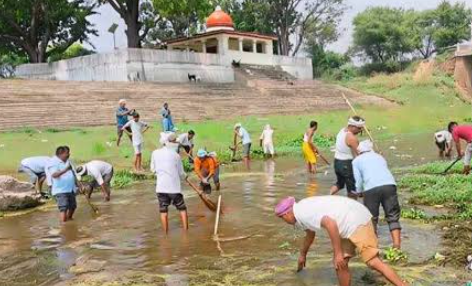
Recognizing the urgency, a large-scale revival effort was launched in Azamgarh district under the Namami Gange Programme. What makes this initiative remarkable is not just its scale, but the collective spirit behind it.
In an unprecedented move, 111 gram panchayats came together to restore an 89-kilometre stretch of the river. This was not a symbolic cleanup, but a structured and sustained campaign involving planning, coordination, and continuous monitoring at the grassroots level.
Village leaders, district authorities, and local residents collaborated to create an actionable roadmap. The initiative addressed multiple challenges simultaneously—ensuring that the river’s revival was both ecological and sustainable.
The rejuvenation drive focused on practical and impactful measures:
Desilting of riverbed: Removing accumulated silt to restore water flow
Waste removal: Clearing plastic, polythene, and debris from riverbanks and ghats
Encroachment clearance: Identifying and freeing riverbank land
Tree plantation: Planting fruit-bearing trees to improve biodiversity and provide economic benefits
These efforts were further strengthened through convergence with MGNREGA, which provided manpower and institutional support for large-scale implementation.
At the heart of this initiative lies community participation. Through shramdaan (voluntary labour), people from all walks of life contributed—schoolchildren, youth groups, women’s self-help groups, sanitation workers, and local volunteers.
Awareness campaigns played a crucial role in changing behavior. Dustbins were installed along the riverbanks, and households were encouraged to segregate wet and dry waste. These measures ensured that the river would remain clean even after the campaign ended.
This sense of ownership transformed the project from a government-led program into a people’s movement.
The results of the initiative are already visible. Improved water quality has led to the revival of aquatic life and biodiversity. Cleaner riverbanks have enhanced the overall ecosystem, while better water flow has improved irrigation potential for nearby farms.
Additionally, the plantation of fruit-bearing trees has introduced an economic dimension, allowing gram panchayats to benefit from the produce. Soil fertility has improved, directly impacting agricultural productivity in surrounding areas.
The riverbanks, once polluted, are now cleaner and more organized—especially at cultural and religious sites where people gather for rituals.
The Tamsa River flows through districts like Ambedkar Nagar and Ayodhya before merging with the Ganga, making its health crucial for the larger river ecosystem.
This initiative demonstrates that restoring smaller tributaries is essential for protecting major rivers. More importantly, it shows that sustainable change is possible when communities take ownership of natural resources.
The revival of the Tamsa River is more than an environmental success—it is a powerful example of collective action. By bringing together 111 villages, the initiative proves that meaningful change does not always require massive funding or advanced technology; it requires participation, awareness, and shared responsibility.
As India continues to battle water pollution and ecological degradation, the Tamsa model offers a replicable blueprint. When communities see a river not as “someone else’s problem” but as their own, transformation becomes not just possible—but inevitable.

A CSR Initiative of

Designed and Executed by

Implemented by


 Technology is a useful servant, but a dangerous master, it was rightly said. Electronic devices have grown into an inevitable part of our daily lives.




Leave A Comment