

The new research conducted by Greenpeace India has highlighted that the maximum temperature in Mumbai and Pune is going to reach up to 45.4C by the 2080-2099 period.
.jpg)
A study has found that earth has lost about 4000 sq kilometers of tidal wetlands since 1999. The factors responsible are– rising sea levels, aquaculture, soil erosion and urban expansion.
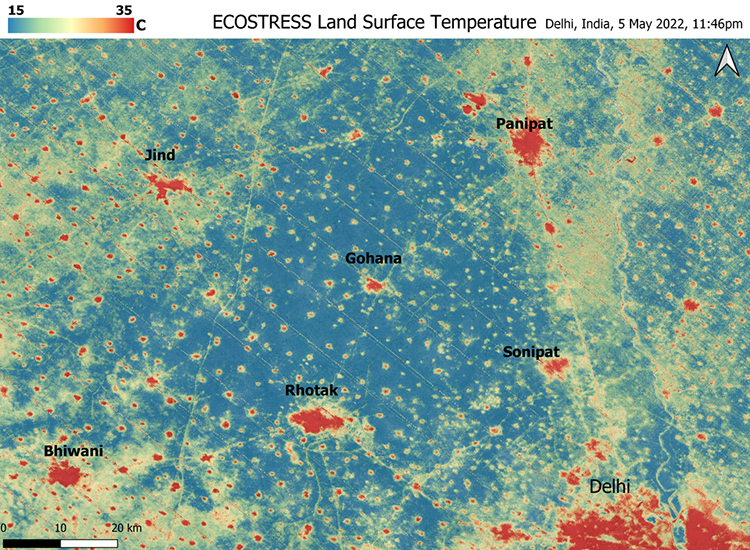
Large parts of north India have witnessed periods of extreme heatwave this year, it is being seen as an effect of rising global temperatures due to carbon emissions. The heatwave has caused deaths, altered crop yields and affected crop cycles.

A new report ‘Drought in numbers’ published by the UN has warned that the world is going to witness more severe cases of droughts due to the rising global temperature. The human-induced activities are already causing water scarcity and affecting billions of people across the world and the new data is pointing out that the situation is going to get worse in the near future, the report added.

The International Food Policy Research Institute has released a new report predicting that India’s food production could decline by 16% due to climate change impacts. The new report on climate change and food systems also projected that the population at hunger risk could also see a spike of 23% by 2030.

According to the World Meteorological Department there is a 50-50 chance that the temperature will cross the 1.5 degree limit from pre industrial levels in the next 5 years. The likelihood of the temperature threshold to be breached in the next 5 years is 93% according to the MET office in London.

On 11th of May, the Tata IPL match between Delhi Capitals and Rajasthan Royals will be the first carbon neutral cricket match. Schneider Electric in partnership with Rajasthan Royals announced that they will offset the carbon emissions from the match by planting 17,000 trees in the next six months so the trees suck equivalent amount of carbon by the year 2052 as the cricket match would have resulted in

Coral reefs are an important part of the ocean ecosystem, they make up for the livelihood of about half a billion people. Recently, scientists have mapped the locations of coral before and after a major ocean heatwave.

Nurdles are tiny pellets of plastic that are supplied as raw materials to industries. There these pellets are melted and poured into molds of different kinds to make stuff, but not all nurdles end up like that. According to estimates 2,00,000 metric tonnes of plastic pellets end up in the ocean. The beads are really lightweight, one weighs about 20 mg. With that estimate about 10 trillion nurdles make their way into the oceans.

Uzbekistan has reported that it will allow the companies to mine cryptocurrencies using solar energy. As per the official statement released by the presidential house, the foreign and domestic crypto companies will be supported by exempting them from the income tax.
A CSR Initiative of

Designed and Executed by

Implemented by


 Technology is a useful servant, but a dangerous master, it was rightly said. Electronic devices have grown into an inevitable part of our daily lives.