
Nepal’s dramatic Himalayan landscape is closely connected to its climate, water resources, agriculture and livelihoods. Yet the same geography that makes the country rich in natural resources also leaves many communities highly exposed to climate-related hazards. Rising temperatures, changing rainfall patterns, melting glaciers, floods, landslides and droughts are creating growing challenges for people across the country.
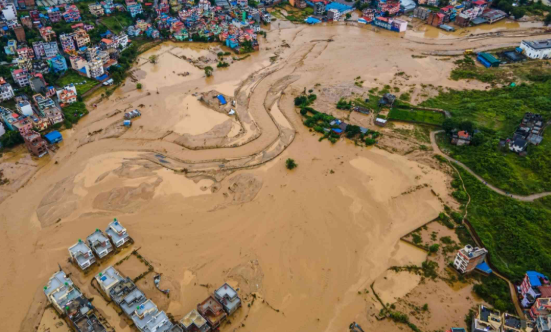
Although Nepal contributes only around 0.02% of global greenhouse gas emissions, it faces significant consequences from a changing climate. The British Red Cross notes that glaciers in Nepal are melting much faster than in the past, increasing risks associated with flooding and landslides. In the mountains, warming can contribute to glacier retreat and permafrost thaw, which can destabilise slopes and increase the possibility of cascading hazards such as landslides and glacial lake outburst floods.
Glacial lakes are an important concern. As glaciers retreat, meltwater can accumulate behind unstable natural dams. If these barriers fail, enormous quantities of water can move downstream within a short period, damaging settlements, roads, bridges, agricultural land and hydropower infrastructure. Nepal has experienced numerous glacial lake outburst flood events, and 47 glacial lakes are currently classified as potentially dangerous, according to a UNDP-supported climate adaptation programme.
Climate impacts are not limited to the high mountains. Changes in rainfall and temperature also affect farming communities. More intense rainfall can increase flooding and erosion, while prolonged dry periods can create water shortages and affect crop production. For communities dependent on agriculture and natural resources, these changes can directly influence food security and household incomes.
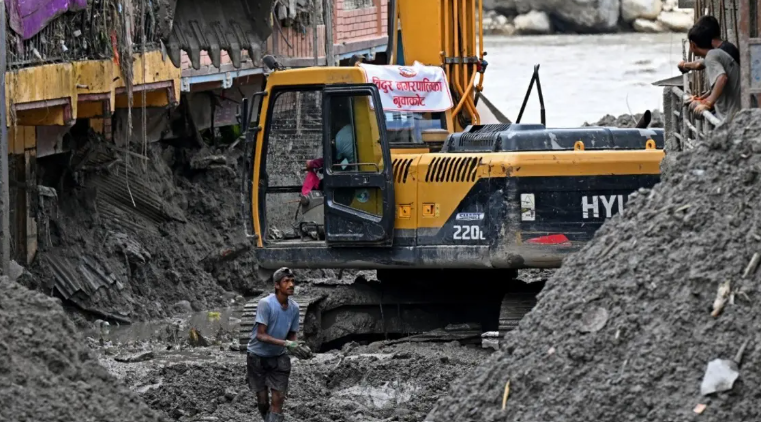
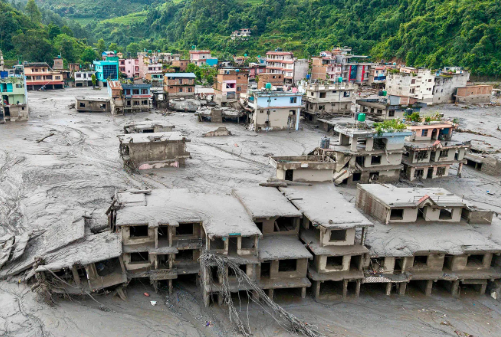
Nepal’s vulnerability was again brought into focus by the August 2026 flash floods in the Rasuwa district. The British Red Cross reported that a sudden surge entered the Bhote Koshi River following what was believed to be a glacier collapse near Langtang Lirung. The precise sequence of events is still being examined, and it would be premature to attribute the individual disaster solely to climate change. However, the broader climate risks facing Nepal are well established.
Adaptation does not always require large engineering projects. Nature-based approaches can also help communities reduce climate risks. In the foothills around Pokhara, for example, communities have used broom grass on landslide-prone slopes. Its roots help hold soil together, while the grass can also provide an additional source of income and livestock feed. Such approaches demonstrate how environmental protection and livelihood security can complement one another.
Community-level infrastructure can also make a difference. In parts of Pokhara, drainage systems and protective walls have been constructed to reduce the impact of monsoon flash floods. According to the British Red Cross, these measures have helped protect around 150 households from flooding.
Nepal is also expanding national efforts to prepare for climate risks. Its third Nationally Determined Contribution, submitted in 2025, identifies early-warning systems, integrated watershed management and glacial lake outburst flood risk reduction among its adaptation priorities. The adaptation measures identified in the plan are estimated to require between US$18 billion and US$20 billion from 2025 to 2035, with international climate finance expected to play an important role.
These investments matter because effective climate adaptation is not only about responding after a disaster. Monitoring glaciers and weather, improving early-warning systems, protecting ecosystems, strengthening infrastructure and ensuring communities have the knowledge and resources to act before hazards strike can reduce potential losses.
Nepal’s experience offers a wider lesson for mountain regions around the world: climate resilience begins with understanding local risks and empowering communities to prepare for them. Protecting nature, strengthening livelihoods and investing in early action can help people adapt to a future in which climate-related hazards are becoming increasingly difficult to ignore.

Manvender is a passionate content creator with a journalism degree who has a knack for developing human-interest content. In the past, he was involved with a National News Channel and a video production company and has experience in writing, designing and video production.
A CSR Initiative of

Designed and Executed by

Implemented by


 Technology is a useful servant, but a dangerous master, it was rightly said. Electronic devices have grown into an inevitable part of our daily lives.




Leave A Comment