
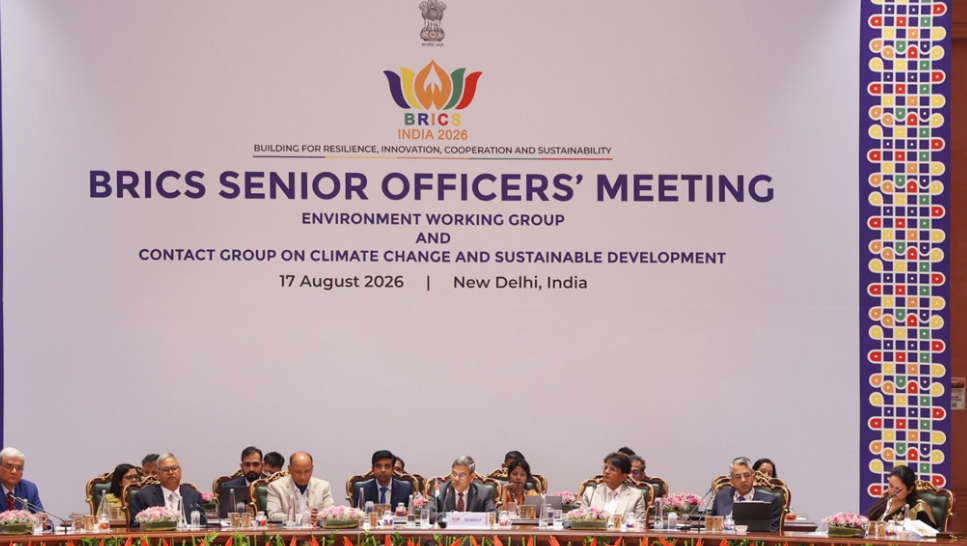
The 18th BRICS Summit, held in New Delhi on September 12–13, 2026, placed resilience, innovation, cooperation and sustainability at the centre of discussions among member countries. The resulting New Delhi Declaration outlines areas where BRICS nations intend to strengthen cooperation on climate action, disaster preparedness, energy systems, biodiversity, forests, water and sustainable development.
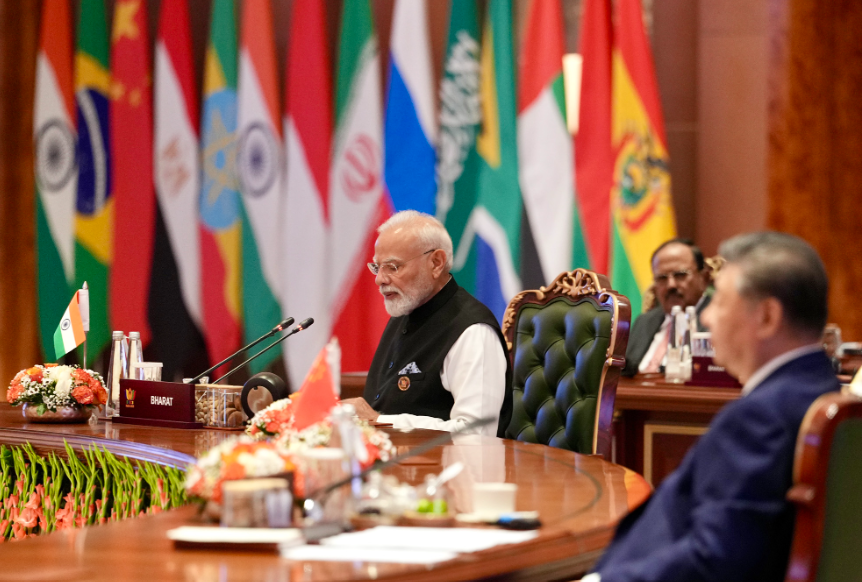
The declaration comes at a time when climate-related risks are increasingly affecting communities, infrastructure, agriculture and economies. BRICS leaders recognised that developing and emerging economies face significant climate vulnerabilities, particularly because of gaps in adaptation finance. They called for greater international cooperation to support climate investment and acknowledged the challenges that high debt burdens can create for developing countries seeking to finance climate and development priorities.
A major focus of the declaration is climate resilience and disaster preparedness. BRICS countries committed to improving disaster-risk reduction systems, strengthening infrastructure and sharing traditional, indigenous and community-based knowledge.
The declaration also highlights the importance of prevention rather than relying only on post-disaster response. Better early-warning systems, risk-informed planning and anticipatory action are identified as important tools for protecting lives, livelihoods and critical infrastructure. BRICS members also welcomed guidelines for integrating disaster-management and early-warning data and principles for climate-resilient urban infrastructure.
Energy security is another important component of the agreement. The declaration recognises the need for reliable and diversified energy supplies while supporting energy transitions that reflect different national circumstances and development needs.
BRICS members highlighted technologies such as smart grids, energy storage, renewable energy, hydrogen and other low- and zero-emission technologies. They also welcomed guiding principles on smart grids and energy storage and proposed greater cooperation through a BRICS centre of excellence focused on these areas. The declaration additionally recognises the importance of critical minerals for clean-energy technologies and resilient supply chains.
The declaration takes a broad approach to energy, acknowledging that countries have different energy systems and development priorities. It calls for transitions that are equitable and inclusive while reducing greenhouse-gas emissions in line with international climate commitments.
Nature conservation features prominently in the environmental agenda. The declaration recognises forests as important for biodiversity, water systems, soil protection, livelihoods and carbon storage. BRICS countries agreed to promote knowledge sharing on sustainable forest management and restoration.
The declaration also welcomed the Tropical Forest Forever Facility, an initiative designed to mobilise long-term, results-based financing for tropical forest conservation. It encouraged potential investor countries to make substantial contributions so that the facility can be capitalised and become operational.
Beyond forests, the declaration addresses wider environmental pressures, including water scarcity, drought, desertification, land degradation, wildfires and sand and dust storms. It calls for integrated management of mountains, forests, wetlands, mangroves, agricultural land, grasslands and other ecosystems.
The declaration also supports cooperation on carbon markets, climate research and community-based adaptation. BRICS countries welcomed knowledge exchange on adaptation approaches that combine scientific research with traditional and local knowledge. They also recognised ecosystems as important contributors to climate resilience and as natural carbon sinks.
Waste management and sustainable consumption form another part of the environmental agenda. BRICS members highlighted the growing volume and complexity of waste associated with urbanisation, industrialisation and changing consumption patterns. The declaration supports stronger waste-management systems, recycling and recovery infrastructure, extended producer responsibility, eco-design and sustainable public procurement.
The New Delhi Declaration therefore presents sustainability as a cross-cutting issue connecting climate action, energy, infrastructure, biodiversity, water, waste management and economic development. Its implementation will depend on how individual BRICS countries translate these shared commitments into policies, investment, technology cooperation and community-level action.
For citizens and communities, the emphasis on early warnings, resilient infrastructure, sustainable resource management and local knowledge highlights an important principle: preparing for environmental change requires action before crises occur. The declaration places these priorities within a broader framework of international cooperation and sustainable development, providing a platform for BRICS countries to exchange knowledge and pursue common solutions to environmental challenges.

Manvender is a passionate content creator with a journalism degree who has a knack for developing human-interest content. In the past, he was involved with a National News Channel and a video production company and has experience in writing, designing and video production.
A CSR Initiative of

Designed and Executed by

Implemented by


 Technology is a useful servant, but a dangerous master, it was rightly said. Electronic devices have grown into an inevitable part of our daily lives.



Leave A Comment