LOW CARBON

Ramveer Tanwar: India’s ‘Pond Man’ Reviving Neglected Water Bodies for a Sustainable Tomorrow

In a time when water scarcity, pollution, and environmental degradation are pressing challenges across India, one young changemaker is turning the tide — one pond at a time. Ramveer Tanwar, known widely as India’s Pond Man, has dedicated himself to restoring once-thriving ponds and lakes that had been reduced to dumping grounds filled with garbage, debris, and disease-carrying waste. His remarkable journey — from a corporate career to full-time environmental restoration — is a testament to the power of individual commitment and community mobilisation.

Born and raised in Dadha village of Uttar Pradesh, Ramveer grew up surrounded by vibrant ponds teeming with life — once his playground and a central part of community life. But as he grew older, he watched these water bodies gradually vanish, overtaken by filth and encroachment. The ponds where ch... Read More

Did you know?

  • Eleven percent of all global greenhouse gas emissions caused by humans are due to deforestation.
  • One billion tons of water falls every minute. Clouds are like floating reservoirs of water. Like squeezing a sponge, they redistribute water as rain, sleet and snow.
  • The term global warming refers to the long-term warming of the planet. The term climate change encompasses global warming, but refers to the broader range of changes that are happening to our planet.
  • Up to 5 million deaths a year could be averted if the global population was more active- WHO.
  • Insufficiently active people have a 20% to 30% increased risk of death compared to sufficiently active people. WHO
  • People having chronic conditions (hypertension, type 2 diabetes, HIV and cancer) should do at least 2.5-5 hours of moderate-intensity aerobic physical activity. WHO
  • 1 person dies from suicide every 40 seconds & almost 8,00,000 people die every year making it the second leading cause of death in individuals aged 15-29 years. who
  • There are only 2 mental health workers per 1,00,000 population in low-income countries & 70 per 1,00,000 population in high-income countries. who
  • The global economy loses about $1 trillion per year in productivity due to depression and anxiety. who
  • Indians are three times more prone to heart attack than Europeans and Americans: Dr Devi Shetty. Financial Express
  • About 800 million tons of carbon are stored in the trees that make up the urban forests of the U.S. nitro fill
  • Mature trees can absorb roughly 48 pounds of CO2 a year and help to reduce ozone levels in urban areas. nitro fill
  • To prevent warming beyond 1.5°C, we need to reduce emissions by 7.6% every year from this year to 2030. (EGR, 2019)
  • 2019 was the second hottest year on record in the last 140 years, just behind 2016, averaging 0.95 of a degree C above the normal (NOAA)
  • Earth naturally sequesters half the CO2 produced by human beings.
  • Highest concentration of CO2 in the atmosphere ever recorded in human history was in July 2021, 416 ppm.
  • On an average, global glaciers have thinned by 10 metres since 1980.
  • Only 57 countries (representing 60 percent of global emissions) are on track to meet their commitments by 2030.
  • Ocean absorbs 93% of the excess heat and 30% of the CO2 emissions produced from human activity. (IPCC, 2019)
  • Around 54% of greenhouse gas emissions come from just 3 of the biggest emitters, USA, China and Europe while the 100 least-emitting countries contribute less than 3%. (Climate Watch, 2020)
View all

Calculate your carbon footprint

Alerts

2025 Marked by Record Extreme Weather: WWA Identifies 157 High-Impact Events

The year 2025 witnessed an unprecedented rise in extreme weather events, according to the latest assessment by World Weather Attribution (WWA). A total of 157 major weather events across the globe met humanitarian impact criteria, meaning they caused large-scale fatalities, displacement, or severe disruption to livelihoods.

Heatwaves and floods emerged as the most frequent and destructive hazards, together accounting for nearly two-thirds of the recorded events. Heatwaves, in particular, proved to be the deadliest, with scientists finding that many of these extreme temperature events were made several times more likely due to human-induced climate change. Compar... Read more


Photo Story

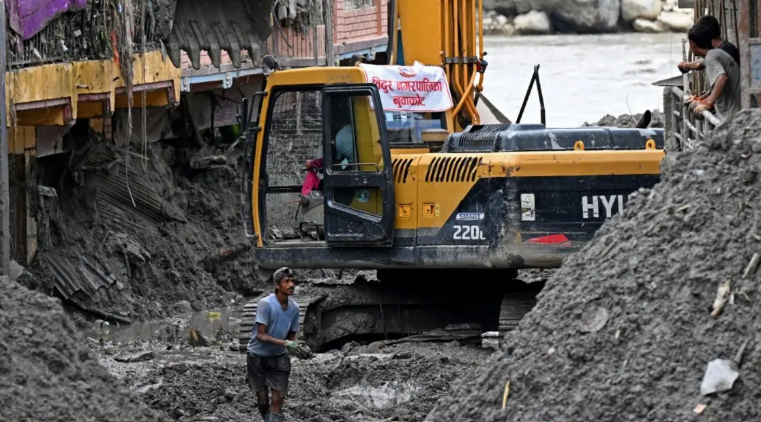
Recent flash floods across the towns and cities in the lap of Himalayan region brought forth destruction, devastation and disaster risks to the forefront. In this photo story we bring to you destruction at the school based on the manjhi river bank, vulnerability of poor household situated adjacent to river bank and reconstruction work post the flashflood in Bhagau Nag area of dharamshala.